Most people hit the slopes for the thrill. But what they don’t realize is that they’re also getting one of the most complete, science-backed workouts available in any season.
Skiing engages nearly every major muscle group, spikes cardiovascular output, sharpens mental focus, and floods the brain with feel-good chemicals — all while surrounded by some of the most beautiful landscapes on earth.
Whether you’re carving groomed runs or pushing through powder, the health benefits of skiing go far beyond burning a few extra holiday calories. In this guide, we break down exactly why skiing is one of the best winter workouts for your body and mind — and what the evolving wellness culture around skiing means for you in 2025 and beyond.
Physical Benefits of Skiing: A Full-Body Winter Workout
1. Skiing Activates Major Muscle Groups
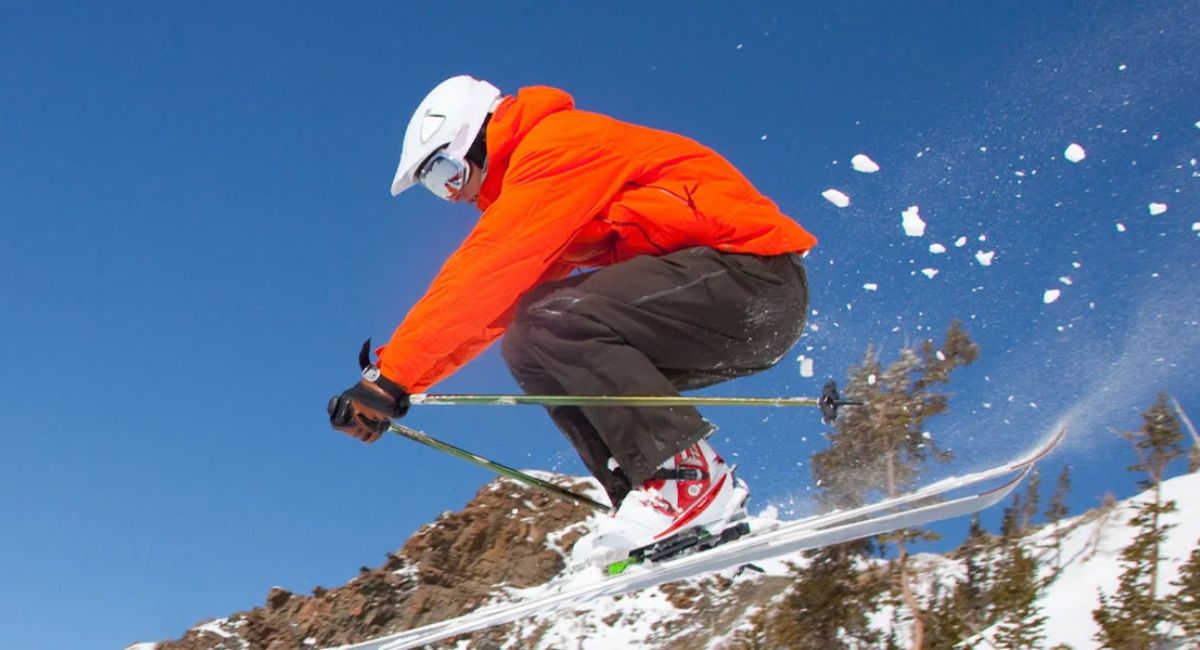
Skiing is, without question, a full-body resistance workout disguised as an adventure sport. The moment you drop into a squat position at the top of a run, your body is already working.
Key muscles engaged during skiing:
| Muscle Group | How Skiing Works It |
| Quadriceps | Constant isometric contraction in the squat stance |
| Hamstrings & Glutes | Stabilizing every turn and absorbing terrain changes |
| Core (abs & obliques) | Rotating the torso and maintaining upright balance |
| Calves | Controlling boot flex and edge pressure |
| Upper body | Pole planting, pushing, and upper-body stabilization (especially in cross-country) |
Research published in the Journal of Sports Science and Medicine confirms that skiing — from the large muscles of the thighs to the smaller stabilizer muscles around the knees — constitutes a complete lower-body workout. But it goes further than that.
The dynamic blend of eccentric, isometric, and concentric movements during carving, skidding, and quick turns makes skiing uniquely demanding compared to most other physical activities.
Cross-country skiing, in particular, adds significant upper-body load through the pole-push cycle, making it one of the rare sports that trains the entire body simultaneously at high intensity.
2. It Provides a Powerful Cardiovascular Boost
Skiing is a natural form of high-intensity interval training (HIIT). You push hard down a run for a few minutes, then recover on the chairlift — then do it all over again. This on-off rhythm mirrors the interval training that modern fitness science considers one of the most effective methods for improving cardiovascular health.
Research has shown that downhill skiing offers cardio-metabolic benefits comparable to cycling or rowing, including:
- Improved insulin sensitivity
- Better body composition and glucose metabolism
- Reduced blood pressure and resting heart rate
- Positive effects on arterial stiffness (a known risk factor for heart disease)
Calorie burn is another motivator. On average, a 155-pound person can burn approximately 432 calories per hour of downhill skiing. Cross-country skiers can torch even more — up to 298 calories in just 30 minutes — making it one of the highest calorie-burning activities in the winter sports category. Cold temperatures add a bonus: the body works harder to maintain core temperature, increasing total energy expenditure.
3. Skiing Builds Balance and Coordination
Few sports challenge proprioception — your body’s ability to sense its own position — the way skiing does. Every turn requires micro-adjustments from your feet, ankles, knees, and hips. Over time, this trains the neuromuscular system in ways that carry over into everyday life.
A 12-week skiing study involving adults aged 60 to 76, published in the Scandinavian Journal of Medicine & Science in Sports, found significant improvements in balance, aerobic capacity, muscular strength, and power. These aren’t just ski-specific gains — better balance reduces fall risk, improves posture, and protects joints as you age.
The agility demands of changing direction on snow also improve flexibility. Combined with the weight-bearing impact on bones, skiing actively supports bone density and long-term joint health — something especially valuable as a preventive measure against osteoporosis.
Mental Health: Why Skiing Elevates the Mind
1. Nature-Based Stress Relief
There’s something deeply restorative about standing at the top of a snow-covered mountain. Research consistently shows that outdoor exercise reduces stress more effectively than the same activity performed indoors. The combination of fresh alpine air, panoramic scenery, and physical exertion creates a powerful reset for the nervous system.
Spending time in natural landscapes — particularly those that inspire awe — has been linked to reduced cortisol levels, improved mood, greater generosity, and enhanced creativity. Ski environments offer all of this at once: the visual scale of mountains, the sensory immersion of cold air and sunlight, and the psychological satisfaction of navigating challenging terrain.
There’s also a social dimension. Chairlift conversations, group runs with friends and family, and the shared energy of a mountain resort contribute to a sense of community and belonging — both of which are critical components of lasting mental health.
2. Mood-Boosting Chemicals at Work
When you ski, your brain is busy. The physical effort of carving through snow triggers the release of endorphins — neurotransmitters associated with euphoria and pain relief. The thrill of speed and new terrain adds a surge of dopamine, creating the repeated reward cycle that keeps skiers coming back run after run.
Dopamine doesn’t just feel good in the moment. It also promotes melatonin production, which supports healthy sleep cycles, immune function, and metabolism — all systems that can become disrupted during winter months. On top of that, exposure to sunlight on the mountain (even in winter) supports vitamin D synthesis, which plays a direct role in mood regulation and helps counteract Seasonal Affective Disorder (SAD).
A recent study found that regular skiers may be at a lower risk of anxiety disorders — a meaningful finding in an era when mental health is a growing global concern.
How Wellness Culture Is Transforming Skiing
1. Biohacking & Performance Optimization
Skiing has become a sport that serious wellness enthusiasts use to hack their physical potential. Elite skiers and performance-oriented recreational skiers alike now incorporate HRV (heart rate variability) tracking, altitude acclimatization protocols, and structured periodization into their ski training. Wearable technology on the slopes — including smart helmets with GPS, impact sensors, and Bluetooth connectivity — allows skiers to monitor performance metrics in real time.
The data-driven approach to ski fitness means off-season conditioning is no longer an afterthought. Strength and conditioning programs tailored specifically to skiing now target VO2 max improvement, unilateral leg strength, and hip mobility — all of which translate directly to better, safer performance on the mountain.
2. The Impact of Sleep Science on Skiing Culture
The skiing community has quietly embraced sleep science as a pillar of performance and recovery. A demanding day on the slopes — engaging every major muscle group through hours of dynamic movement — naturally promotes deep, restorative sleep.
Physical exhaustion from skiing has been shown to help people fall asleep faster and experience more quality rest compared to sedentary days.
Beyond recovery, sleep is now understood as a key driver of next-day performance, muscle repair, and injury prevention. Many ski resorts at altitude are even tailoring guest wellness programs around sleep optimization, including reduced screen time in the evening and nutritional protocols that support melatonin production.
3. Eco-Living and Sustainable Ski Gear
The ski community has a deep, personal stake in climate preservation — and that’s reshaping the gear industry from the ground up. Leading brands like Salomon, Patagonia, and Atomic are investing heavily in sustainable materials and manufacturing processes.
Key trends in sustainable ski gear (2025–26):
- Bamboo ski cores replacing traditional fiberglass and resin
- Recycled polyester and bio-based materials in outerwear
- Biodegradable waxes replacing chemically harmful traditional options
- Dual BOA Fit Systems for longer-lasting boots with less waste
- Carbon-neutral manufacturing and lifetime repair programs
Brands like Mervin Manufacturing (Lib Tech) build skis with FSC-certified wood cores and non-toxic resins, powered by renewable energy. Patagonia’s Worn Wear program keeps gear out of landfills through repair and resale. These aren’t just marketing gestures — they reflect a genuine shift in how the skiing world sees its relationship with the natural environment it depends on.
Why the Right Ski Gear Matters More Than Ever
Your experience on the mountain — and the physical benefits you take home — is directly shaped by the quality and fit of your equipment. Poorly fitted boots cause compensatory movement patterns that reduce workout effectiveness and increase injury risk. Skis that don’t match your skill level and terrain preference limit your ability to progress.
Essential gear considerations for maximizing skiing’s health benefits:
- Ski boots: Proper fit is non-negotiable. A boot that fits correctly improves energy transfer, reduces fatigue, and prevents blisters and joint stress. Custom heat-moldable liners and the newer BOA fit systems offer precision that traditional buckles can’t match.
- Skis: Match ski width and stiffness to your ability and the terrain you ski most. Softer, wider skis suit beginners and powder; stiffer, narrower skis suit advanced carvers.
- Helmet: A well-fitted, certified helmet is the single most important safety item. Modern smart helmets add GPS and impact detection without meaningful added weight.
- Base layers: Moisture-wicking, insulating base layers regulate body temperature, keeping muscles warm and reducing cramp and injury risk.
- Poles: Correct pole length improves upper-body posture and reduces shoulder strain.
Investing in quality, well-fitted gear isn’t a luxury — it’s the foundation of a safer, more effective, and more enjoyable ski workout.
Conclusion
Skiing is more than a winter hobby. It’s a scientifically backed, full-body workout that builds strength, sharpens balance, improves cardiovascular health, and delivers powerful mental health benefits — all while immersing you in some of the world’s most awe-inspiring environments. As wellness culture continues to intersect with alpine sport, the case for skiing as a cornerstone of a healthy winter lifestyle has never been stronger.
Whether you’re a first-timer clicking into rental skis or a seasoned skier chasing powder, the slopes offer something rare: exercise that genuinely doesn’t feel like exercise. Get the right gear, embrace the mountain, and let your body do what it’s built to do.
FAQs
Is skiing a good workout for weight loss?
Yes. Skiing burns 300–500 calories per hour depending on intensity, while simultaneously building lean muscle — making it effective for both fat loss and body composition improvement.
What muscles does skiing work the most?
Skiing primarily targets the quadriceps, hamstrings, glutes, and core, with additional demands on calves and (especially in cross-country) the upper body.
How does skiing benefit mental health?
Skiing triggers endorphin and dopamine release, reduces cortisol through nature exposure, supports vitamin D production, and may lower the risk of anxiety disorders with regular practice.
Is skiing better cardio than running?
Downhill skiing offers cardio benefits comparable to cycling and rowing. Cross-country skiing rivals running in cardiovascular demand, with some studies showing higher VO2 max values in cross-country skiers than most other endurance athletes.
How many calories does skiing burn per hour?
A 155-pound person burns approximately 400–432 calories per hour of downhill skiing. Cross-country skiing can burn upward of 580 calories per hour at moderate intensity.

I’m Muhammad Zeeshan – a guest posting and content writing expert with 4 years of experience.