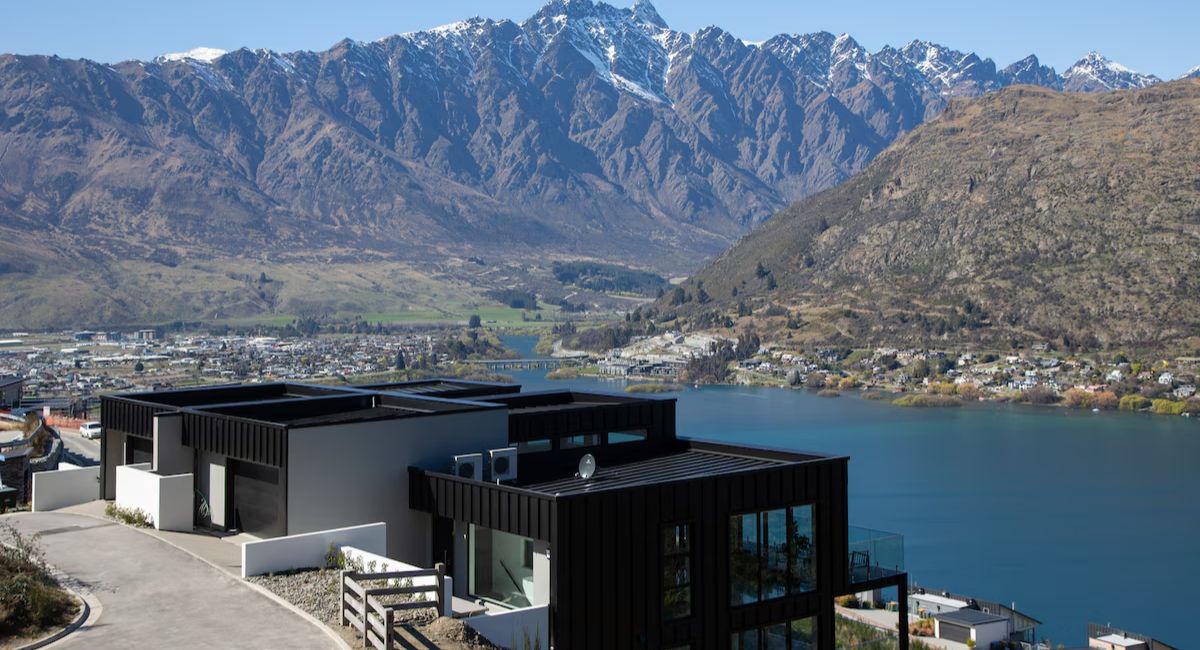
Queenstown in 2026 is one of the most sought-after addresses in the Southern Hemisphere. Property values have climbed, lifestyle expectations have grown, and outdoor living spaces have moved from being a “nice to have” to a genuine deal-maker in the local real estate market. If you’re a Queenstown homeowner thinking about adding a deck, you’re making a smart move — but only if it’s done right.
Building a deck here isn’t the same as building one in Auckland or Christchurch. The alpine climate, steep terrain, and Queenstown Lakes District Council (QLDC) requirements create a set of challenges that standard guides simply don’t address.
This article cuts through the noise and gives you everything you need: material recommendations, consent rules, realistic 2026 costs, and design features built specifically for Queenstown’s unique environment.
Read More: Best Tropical Palms and Ferns for Warm Climates: A Complete Grower’s Guide
Understanding Queenstown’s Unique Deck-Building Challenges
Alpine Climate Demands
Queenstown sits at 310 metres above sea level, and the climate it produces is genuinely demanding. Summers deliver intense UV radiation — stronger at altitude than at sea level — that bleaches, cracks, and dries out untreated or soft timber within a single season.
Winters bring genuine freeze-thaw cycling, where moisture trapped in porous materials expands as it freezes, splitting boards and loosening fixings over time.
Add snow load on elevated structures and consistent wind exposure on north and west-facing sections, and you have a building environment that destroys the materials that perform fine everywhere else in NZ.
This is why treated pine — NZ’s default decking material — underperforms significantly in Queenstown. Local builders and material specialists consistently recommend moving up to hardwoods, thermally modified timber, or quality composite products as baseline choices for this region.
Maximizing Your Section’s Potential
Many Queenstown sections are steep, rocky, or irregularly shaped — and that’s actually a significant advantage when it comes to deck design. Multi-level platforms, cantilevered viewing decks, and hillside entertaining areas can capture views no flat-section deck could ever match.
The key is working with a builder who understands Queenstown’s terrain rather than imposing a standard flat deck layout onto a site that doesn’t suit it.
Material Selection for Queenstown Conditions
Natural Wood Options
| Timber Type | 2026 Cost (per m² installed) | Alpine Performance | Ongoing Maintenance |
| Treated Pine (H3.2) | NZ$350–$450 | Low — degrades fast under UV and freeze-thaw | High — annual staining |
| Kwila (Merbau) | NZ$500–$700 | High — dense, UV-resistant, stable | Moderate — oil every 12–18 months |
| Vitex | NZ$480–$650 | High — lower tannin bleed than Kwila | Moderate — oil every 12–18 months |
| Thermally Modified (e.g. Thermory) | NZ$550–$750 | Very High — engineered for freeze-thaw stability | Low — periodic cleaning only |
Kwila is a dense Southeast Asian hardwood delivering a warm reddish-brown finish. Its natural oils give strong UV resistance, making it one of the top performers in high-altitude environments. Note: Kwila bleeds water-soluble tannins when first exposed to rain — protect surrounding concrete, tiles, and schist paving during initial weathering.
Vitex weathers to a beautiful silver-grey tone, bleeds less than Kwila, and is well-regarded by Queenstown builders for its balance of performance and aesthetics. Thermally modified timber (heat-treated to remove residual moisture and improve dimensional stability) is increasingly popular in alpine builds for its resistance to the freeze-thaw movement that shortens the life of untreated hardwoods.
Composite Alternatives
Composite decking — engineered from wood fibres and recycled plastic — has matured into a genuine premium option for Queenstown conditions. Leading 2026 brands (Millboard, Outdure, Futurewood) have resolved the UV warping issues that plagued earlier products and now offer systems tested for high UV and wide temperature swing environments.
- Zero staining, oiling, or sealing over the full product life
- Colour-stable under Queenstown’s intense alpine UV
- Resistant to moisture absorption during wet winters and freeze-thaw cycles
- Splinter-free — important for families with barefoot summer use
- 25-year manufacturer warranties on premium-grade products
- 2026 installed cost range: NZ$550–$750 per m²
Structural Considerations
Whatever surface material you choose, the substructure is what keeps your deck safe and standing for decades. Queenstown conditions require:
- Stainless steel or hot-dipped galvanised fasteners — standard zinc hardware corrodes rapidly under alpine freeze-thaw conditions
- H4-rated treated timber for all bearers, joists, and posts in ground contact
- Engineered concrete footings, calculated for both snow load and ground movement
- Built-in drainage beneath the deck to prevent ice formation under the structure in winter
- Engineer-certified substructure for any deck above 1.5 metres — required for QLDC building consent
2026 Consent Rule: Under NZS 3604:2011 and the Building Act 2004, any deck with a fall height above 1.5 metres requires a building consent from QLDC. All restricted building work must be carried out or supervised by a Licensed Building Practitioner (LBP). Verify any builder’s credentials on the official MBIE register (lbp.govt.nz) before signing a contract.
Design Elements That Define Queenstown Decks
View Optimization Strategies
In Queenstown, the view is the product. Frameless or semi-frameless glass balustrade systems are the default choice for elevated decks facing the Remarkables or Lake Wakatipu — providing legally required fall protection while keeping sightlines completely clear. In 2026, expect NZ$550–$900 per linear metre for quality frameless glass systems.
Deck orientation is equally critical. A skilled local designer will assess your section’s solar aspect, prevailing wind direction, and peak sightlines before laying out the footprint.
Year-Round Usability Features
In 2026, the trend among premium Queenstown outdoor builds is toward fully functional year-round outdoor rooms. Features that make this possible:
- Louvre roof systems: Adjustable aluminium louvres (SunFold, SunPivot from Bask Outdoor Living, installed locally by Elevate Building Co.) that control sun, shade, and rain without fully enclosing the space — certified for alpine conditions
- Overhead heating: Gas or electric infrared heaters extending comfortable use into Queenstown’s coldest months
- Integrated LED lighting: Step lighting, perimeter strips, and overhead feature lighting for year-round evening use
- Windbreak screens: Toughened glass or polycarbonate panels cutting alpine wind without sacrificing views
- Sliding glass enclosures: Fully retractable glass wall systems for complete all-season use
The Value of Professional Deck Builders in Queenstown
Local Knowledge Advantage
The best Queenstown deck work comes from LBP-certified general builders with extensive local project history. What matters most is site-specific experience: knowledge of how Queenstown’s schist rock and variable soils affect footing design, how to manage drainage on north-facing slopes, and how QLDC consent officers approach hillside structure applications.
In 2026, the most credentialled operators hold LBP certification, NZ Certified Builder (NZCB) status, or Master Builders membership. Always verify credentials on the LBP register at lbp.govt.nz before committing.
Quality Assurance Benefits
Professional certification delivers real, practical protections:
- Workmanship warranties — typically 1–5 years on labour
- Manufacturer guarantees on composite materials — up to 25 years on premium brands
- Full management of the QLDC building consent process from application through to CCC
- Producer statements and compliance documentation protecting your property at resale
- Insurance coverage for the build period and LBP-covered defects
Planning Your Deck Project: A Realistic Timeline
Design Phase (2–4 weeks)
Site assessment, sightline analysis, structural design, material selection, and QLDC pre-consultation where required. The cheapest stage to get right — invest the time here.
Approval Phase (2–6 weeks)
QLDC accepts digital applications in 2026, which has improved processing for straightforward residential projects. Quality of submission directly affects speed — an experienced LBP managing the application reduces back-and-forth significantly.
Construction Phase (3–8 weeks)
Dependent on deck size, site access, substructure complexity, and weather windows. Winter builds are possible but slower. Total realistic timeline: 8–18 weeks from first consultation to handover.
Also Read: Carl Azuz Age, Background & Life Story: Everything You Need to Know
Budget Considerations for Queenstown Decks in 2026
Site-Specific Factors
Steep sections may require machinery access solutions, deep or rock-anchored footings, and retaining structures adjacent to the deck. Always request a detailed site assessment before finalising your budget.
Design Elements
| Feature | 2026 Approximate Add-On Cost |
| Frameless glass balustrades | +NZ$550–$900 per linear metre |
| Louvre roof system (Bask/SunFold) | +NZ$18,000–$45,000 |
| Integrated LED lighting package | +NZ$2,500–$7,000 |
| Outdoor kitchen or BBQ integration | +NZ$10,000–$30,000+ |
| Sliding glass enclosure system | +NZ$15,000–$35,000 |
Professional Services
For a mid-size Queenstown deck (30–40m²) with Kwila or Vitex hardwood decking, a consented substructure, and frameless glass balustrades, budget NZ$28,000–$55,000 all-in for 2026. Always obtain itemised quotes from at least two LBP-certified builders.
Maximizing Your Investment
Lifestyle Enhancement
A well-designed Queenstown deck becomes your most-used room regardless of season — morning coffee facing the Remarkables, summer entertaining, and with a louvre roof and heating, a functional outdoor living room from late winter through early autumn.
Property Value Addition
Queenstown’s 2026 property market remains one of NZ’s strongest. Quality outdoor living spaces are a baseline expectation among buyers. A professionally built, consented deck with view optimization and year-round usability adds measurable resale value — while unconsented or poorly built decks create due diligence red flags that reduce sale prices.
Next Steps for Your Dream Deck
- Define your priorities: views, entertainment capacity, family use, year-round usability
- Set a realistic total budget including site preparation, consent fees, design, and all add-on features
- Shortlist LBP or NZCB-certified builders with verifiable Queenstown project experience — check lbp.govt.nz
- Request in-person site visits and itemised written quotes from at least two or three builders
- Review material samples outdoors on your section — lighting conditions at altitude change how materials look
- Confirm QLDC consent requirements with your builder before signing contracts or beginning site work
- If adding a louvre roof or glass enclosure, consult Elevate Building Co. early — these systems must be co-designed with the deck substructure from the start
Conclusion
Deck building in Queenstown in 2026 is a fundamentally different proposition from building one elsewhere in New Zealand. The alpine climate demands materials that handle UV, freeze-thaw, and snow load. The terrain demands site-specific structural engineering. The council requires LBP involvement for anything above 1.5 metres. And the property market means doing it properly pays back at resale — while cutting corners creates problems that follow you for years.
Choose the right material for alpine conditions. Work with an LBP-certified local builder who knows Queenstown’s terrain. Invest in design features that make the deck work in February and in July. Do those three things, and your deck will be the best room in your home for the next twenty years.
FAQs
How long does a deck project take in Queenstown?
Allow 8–18 weeks from first consultation to completion, covering design, QLDC consent processing, and construction — longer for complex hillside builds or winter scheduling.
Is composite decking suitable for Queenstown’s climate?
Yes — 2026-generation composite products from brands like Millboard and Outdure handle high UV and wide temperature swings, and require almost no maintenance over their 25-year lifespan.
Will a professional deck builder manage QLDC consent in Queenstown?
Reputable LBP-certified builders handle the entire QLDC consent process — documentation, application, and all required inspections through to the Code Compliance Certificate (CCC).
How often does a timber deck need maintenance in Queenstown’s climate?
Hardwood decks (Kwila, Vitex) need oiling every 12–18 months under Queenstown’s intense alpine UV; composite decks require only periodic cleaning with no staining or sealing throughout their lifespan.
Can a louvre roof be added to a new deck in Queenstown?
Yes — but louvre systems must be co-designed with the deck substructure from the start; adding them retrospectively costs significantly more and may require a separate consent application.
Visit InfozCelebritys for more blogs.

I’m Muhammad Zeeshan – a guest posting and content writing expert with 4 years of experience.