If your watches are still tangled together in a drawer, you’re probably doing more harm than you realize. Straps get scratched, dials pick up dust, and that automatic movement you paid good money for slowly loses its accuracy from sitting still too long. A dedicated watch box solves all of this in one simple purchase.
This guide walks through everything you need to know in 2026 — what a watch box actually is, why it matters, the different types available, what to look for before buying, and how UK shoppers in particular can find the right one for their budget.
What Is a Watch Box?
A watch box is a purpose-built container designed to store, protect, and often display one or more watches. Unlike a generic drawer organizer, a proper watch box uses individually shaped cushions or pillows, soft interior lining (usually velvet, suede, or microfiber), and a sturdy outer shell to keep each timepiece secure and undamaged.
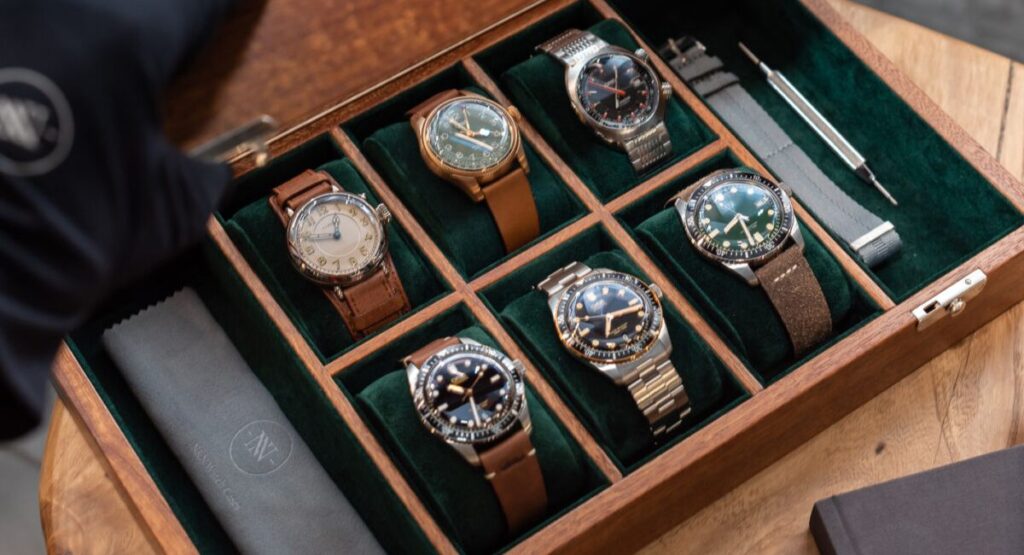
Watch boxes range from simple two-slot cases for casual owners to elaborate, glass-topped display cabinets used by serious collectors. Some even include built-in winders that keep automatic movements running when they’re not being worn.
Why a Watch Box Is Important
1. Protection from Damage
Watches left loose in a drawer are exposed to knocks, scratches, and pressure from other objects. A watch box holds each piece in its own compartment, preventing metal-on-metal contact and reducing the risk of scuffed cases or bent hands.
2. Dust and Moisture Control
Dust buildup can work its way into case seams and crowns over time, while excess moisture is one of the leading causes of internal corrosion. A well-sealed watch box with a lid keeps both dust and humidity away from your collection.
3. Organization and Convenience
When every watch has a dedicated slot, you can see your entire collection at a glance and grab the right one in seconds — no more digging through tangled straps or unsorted piles.
4. Enhanced Longevity
Consistent, controlled storage conditions help preserve leather straps, metal finishes, and movement components, extending the usable life of even entry-level watches by years.
Types of Watch Boxes
1. Standard Watch Box
The most common option, typically holding between 2 and 12 watches. These usually feature a hinged lid, foam or velvet-lined slots, and a simple wood or synthetic leather exterior. Ideal for everyday owners who want basic protection and organization without a large investment.
2. Luxury Watch Box
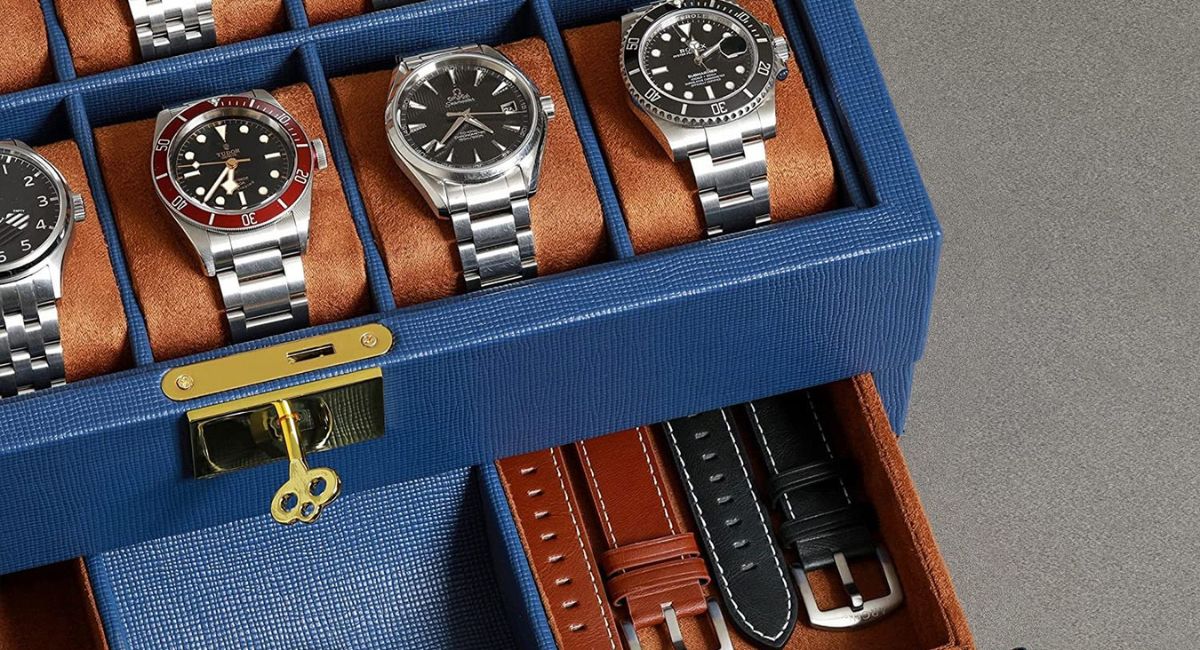
Built with premium materials such as genuine leather, high-gloss wood veneer, or brushed metal, luxury watch boxes often include a glass display top, individually stitched cushions, and sometimes a lock. These are popular gift items and status pieces for serious collectors.
3. Watch Box with Winder
Designed for automatic (self-winding) watches, these boxes include one or more rotating modules that mimic the natural motion of the wrist. This keeps the movement wound and ready to wear, and prevents the inaccuracy that comes from a watch sitting idle for weeks.
4. Travel Watch Box
Compact, padded, and often zippered or clasped shut, travel watch boxes are built to survive being tossed into a suitcase or carry-on. Many include a shock-resistant shell and a soft interior to protect one to three watches on the move.
Materials Used in Watch Boxes
Exterior Materials
- Wood – classic, sturdy, and available in finishes from oak to walnut
- Genuine or faux leather – premium look and feel, common in luxury boxes
- Metal or aluminum – durable and often used in travel cases
- Fabric-covered MDF – lightweight and budget-friendly
Interior Materials
- Velvet or velour – soft, classic lining that prevents scratches
- Microfiber suede – modern, easy to clean, and gentle on straps
- Memory foam pillows – shaped to cradle the watch face and keep straps from creasing
- Felt – a lower-cost lining still commonly found in entry-level boxes
How to Choose the Right Watch Box
1. Number of Watches
Count your current collection and add room for growth. Most collectors underestimate how quickly their collection expands, so buying a box with a few extra slots is usually a smart move.
2. Watch Size Compatibility
Large dive watches, chronographs, and smartwatches with wide straps need bigger slots than a slim dress watch. Always check the slot diameter and depth before buying, especially for oversized sport watches.
3. Security Features
If you own valuable or luxury pieces, look for a box with a lockable lid, reinforced hinges, or even a small safe-style latch for extra peace of mind.
4. Display or Storage Purpose
Decide whether you want a closed box purely for protection, or a glass-topped case that lets you admire your collection while it’s stored. This choice affects both material and price.
Watch Box UK: What Buyers Should Know
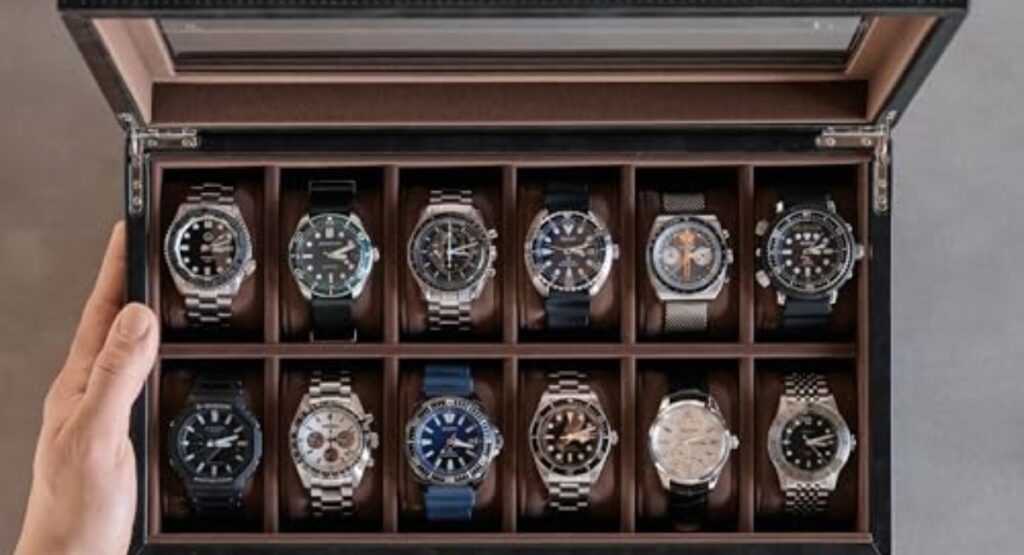
Design Preferences
UK buyers tend to favor understated, classic designs — think dark wood, black or tan leather, and minimal branding — over flashier options. Brands such as Stackers, WOLF, and Rothwell are widely recognized in the UK market for combining clean aesthetics with practical storage.
Quality Expectations
Because many UK shoppers view a watch box as a long-term purchase, stitching quality, hinge durability, and lining material tend to matter more than flashy extras. Reading verified customer reviews before buying is a common and sensible step.
Price Range in the UK
| Tier | Typical Price (GBP) | What You Get |
| Entry-level | £15 – £40 | Basic wood or fabric box, felt lining, 2–8 slots |
| Mid-range | £40 – £150 | Leather or faux-leather exterior, glass lid, better cushioning |
| Premium/Luxury | £150 – £350+ | Branded designer boxes, locks, winders, premium leather |
Benefits of Using a Watch Box
- Keeps every watch scratch-free and dust-free
- Makes your collection easy to browse and access
- Protects your investment, especially for higher-value pieces
- Doubles as an attractive display piece on a dresser or shelf
- Makes gifting or reselling watches easier with a presentable case
How to Organize Watches Inside a Watch Box
- Group watches by how often you wear them, placing daily options at the front
- Keep automatic watches with a winder module, and manual or quartz watches in standard slots
- Store delicate or vintage pieces in the most cushioned, protected slots
- Separate metal bracelets from leather straps where possible to avoid transfer marks
- Leave a little breathing room between slots rather than overpacking the box
Watch Box Maintenance Tips
- Wipe down the interior lining regularly with a soft, dry cloth
- Keep the box in a stable environment, away from direct sunlight and damp areas
- Avoid overloading slots designed for smaller watches with oversized pieces
- Check winder batteries or power settings periodically if your box includes one
- Air out the box occasionally if it has a fully sealed lid, to prevent trapped moisture
Who Should Buy a Watch Box?
A watch box isn’t just for serious collectors. It’s a practical purchase for:
- New watch owners who want to protect their first purchase
- Growing collectors who need better organization
- Frequent travelers who need safe, portable storage
- Anyone shopping for a thoughtful gift for a watch enthusiast
Watch Box as a Gift Idea
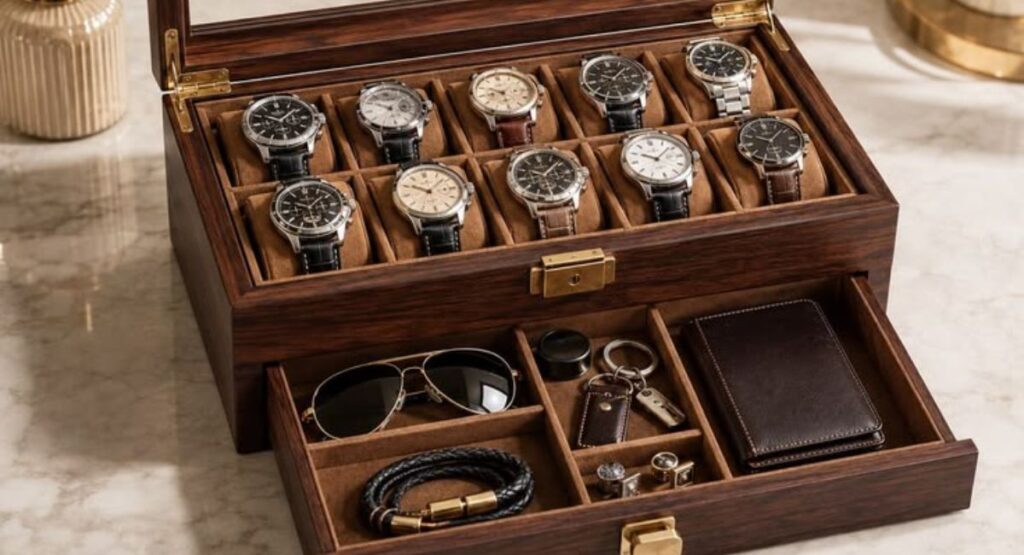
Watch boxes are a popular and versatile gift for birthdays, anniversaries, graduations, or retirements. A well-chosen box signals that the giver understands the recipient’s interest in horology, and many brands offer personalization options like engraved nameplates or monogrammed lids to make the gift feel more meaningful.
Common Mistakes to Avoid
- Buying too small – not accounting for future watch purchases
- Ignoring slot size – ending up with a box that can’t fit larger watches
- Choosing looks over lining quality – a beautiful exterior means little if the interior scratches straps
- Skipping reviews – hinge and stitching quality vary widely between budget brands
- Storing in humid areas – bathrooms and unventilated cabinets can accelerate moisture damage
Frequently Asked Questions (FAQs)
What is the best material for a watch box?
Wood or leather exteriors with velvet or microfiber suede interiors offer the best balance of durability and watch protection.
Do I need a watch box with a winder?
Only if you own automatic watches you don’t wear daily; a winder keeps them accurate and ready to wear.
How many slots should a beginner’s watch box have?
A 6–8 slot box is a good starting point, allowing room for a small collection to grow.
Are luxury watch boxes worth the extra cost?
If you own higher-value watches or want a display-quality piece, the added security and materials are generally worthwhile.
How do I clean a watch box?
Wipe the exterior with a dry or slightly damp cloth and gently brush out interior linings to remove dust buildup.
Conclusion
A watch box is one of the simplest upgrades any watch owner can make — protecting your collection from damage, dust, and moisture while keeping everything organized and easy to access. Whether you’re picking up a basic box for a first watch or investing in a luxury display case with a winder, matching the box to your collection size, watch dimensions, and budget will ensure your timepieces stay in great condition for years to come.
- Read More Blogs: Infoz Celebritys

I’m Muhammad Zeeshan – a guest posting and content writing expert with 4 years of experience.